Most educators still think of their competition as other schools and other courses on the same topic. That mental model is years out of date. The real competition for your learner's attention is not the institute down the road. It is a phone full of apps designed by some of the best product teams on earth to win seconds of focus.
Once you accept that, the design of an online course changes. You are not just teaching, you are competing for attention against feeds that the learner can flick open in the same second they would have opened your lesson. The good news is that you do not need to become an entertainment company to win. You just need to design with attention in mind.
This piece walks through the new attention realities every modern educator faces, and the specific design moves Vacademy makes to help you compete.
Six Realities of the Attention Economy in 2026
Each of these is a constraint your course design has to work with, not against.
The Default Action Is the Phone
When a learner has a free minute, they reach for a phone, not a textbook. Your course is being measured against the experience of the best apps in the world.
Attention Spans Are Trained, Not Innate
Short-form video has trained learners to expect immediate engagement. A long, slow opening to a lesson loses them in seconds, not minutes.
Friction Is the Enemy
Every extra tap, login screen and unclear next step costs you a learner. The platforms winning attention have made every action one swipe away.
Personal Beats Generic, Every Time
Feeds win because they feel personal. A course that opens the same way for every learner feels generic in comparison and loses the early seconds.
Mobile First Is Not Mobile Compatible
A desktop site shrunk to fit a phone is not mobile-first. Learners feel the difference instantly and judge the course on that experience.
Variety Holds Attention, Monotone Loses It
The best feeds are not one format. Video, image, text, interaction, in quick succession. Courses that rely on one format lose attention fast.
Bite-Size Without Losing Depth
One of the easiest ways to lose modern attention is one long, dense lesson. Vacademy structures content into modular sections, with shifts in format every few minutes, so the depth of teaching stays intact while the rhythm respects how learners actually consume content today.
Patterns to Borrow From the Apps Stealing Your Attention
You do not have to invent new design tricks. The apps winning learner attention have already done the research. Just borrow what works.
| Pattern | Borrowed From | How to Apply in Your Course |
|---|---|---|
| Open with a hook in three seconds | Short-form video | Start each lesson with a question, surprising fact or applied moment, not a long welcome. |
| Change format every two to three minutes | Modern feeds | Move between video, slide, quiz and applied task in quick succession. |
| Personal opening lines | Email marketing | Reference the learner by name and progress in the first sentence of every recap. |
| Make the next step one tap | Streaming services | Always show one prominent next action on the learner home, never a menu. |
| Reward consistency | Habit and language apps | Show streaks, badges and small milestones to reward daily engagement. |
How Vacademy Helps Your Course Win Attention
Six design moves built into the platform, so you do not have to architect them yourself.
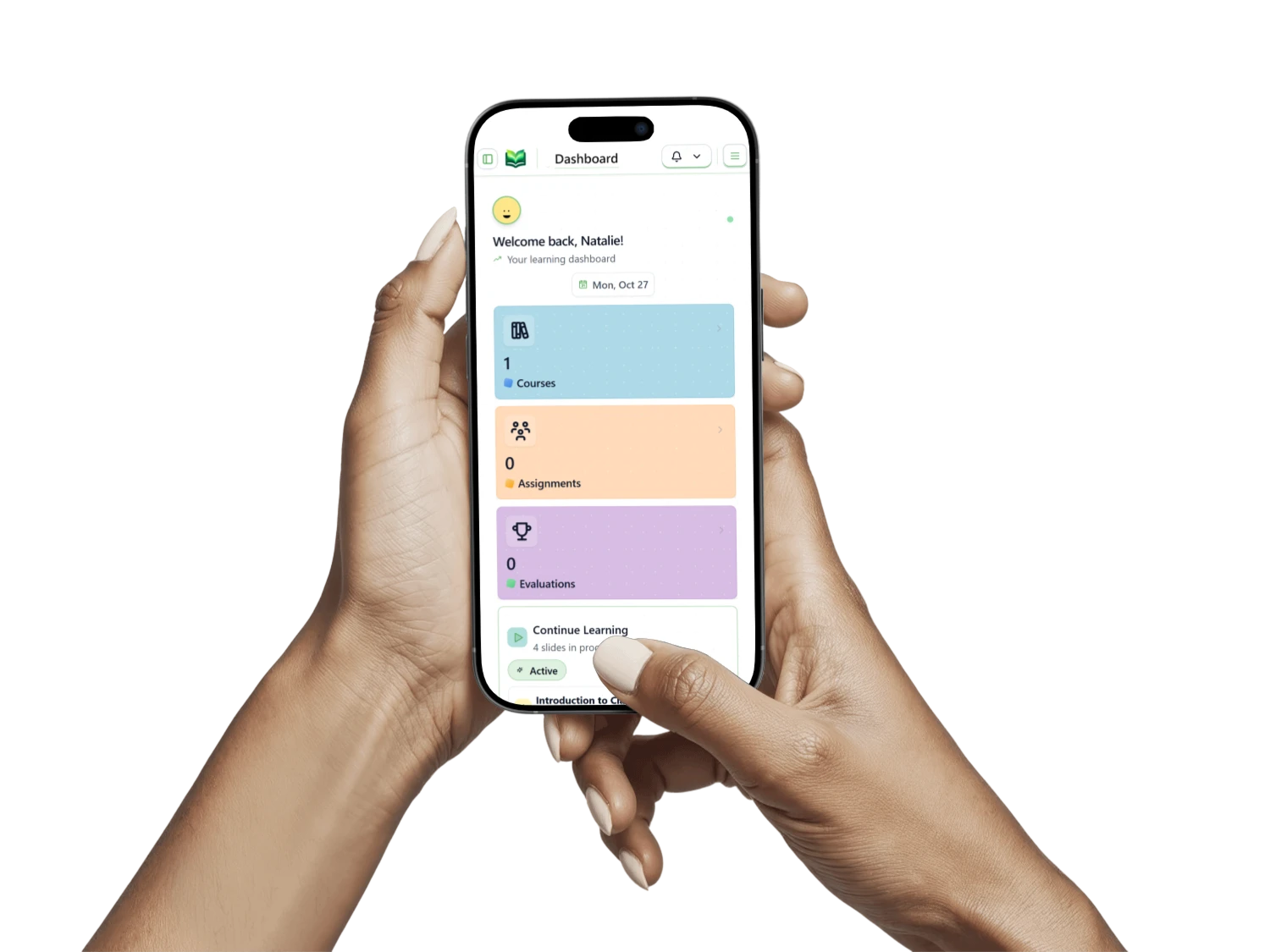
Mobile-First Learner App
A branded, fast-loading mobile app that lives on the home screen, designed for attention conditions of 2026, not 2016.
AI-Driven Variety in Lessons
Vsmart AI mixes video, slides, quizzes and applied moments inside the same lesson, so the format shifts every few minutes.
Single Clear Next Step
Every learner screen surfaces one prominent action, not a wall of choices. Friction drops, completion rates climb.
Quick-Win Lesson Openings
AI-generated lesson plans front-load applied moments, so the first three minutes deliver value, not setup.
Behavior-Triggered Personal Nudges
Reminders and recaps are personalised based on what the learner did, watched or missed, on the channel they read.
Real-Time Engagement Signals
Educators see attention dropping in real time, lesson by lesson, and can fix the weakest moments before the next cohort.
Quizzes Are the Hidden Attention Tool
Most educators think of quizzes as testing. Smart educators use them as attention tools. A short, applied quiz mid-lesson interrupts passive watching and resets engagement. Vsmart Topics builds these quizzes for you per chapter in seconds.
Live Sessions Reset the Attention Cycle
Recorded courses naturally lose attention by week two. A scheduled live session with the educator, even a 30 minute Q and A, gives the cohort a reason to come back. Vacademy makes scheduling, reminders and attendance effortless, so live becomes a habit, not a project.
A Practical Attention Playbook for Your Next Cohort
- Open every lesson with a three-second hook, a question, surprise or applied moment.
- Change format every two to three minutes inside each lesson.
- Use Vsmart Topics to embed one short quiz mid-lesson, not just at the end.
- Surface one clear next step on the learner home, never a menu of options.
- Send personalised recaps over WhatsApp within two hours of class one.
- Schedule one live touchpoint per week to reset the attention cycle.
Design Your Course for Attention, Not Just Content
Walk through your current course with the Vacademy team. We will identify the three attention moments most likely to lift completion rates in your next cohort.
Frequently Asked Questions
Does competing for attention mean dumbing down content?
No. Competing for attention is about respecting how learners consume content today, not about reducing depth. The best courses combine deep teaching with attention-aware design, so the depth actually lands.
Will using feed-style design tricks make my course feel cheap?
Used well, no. Hooks, variety, personal openings and clear next steps make courses feel more professional, not less. The cheap-looking courses are the ones that ignore attention completely, not the ones that respect it.
What is the single highest impact attention change I can make?
Front-loading a quick win in the first three minutes of class one. If the learner walks away from the first session with something they did, not just heard, second attempt rate and completion both lift sharply.
How does Vacademy actually help me design for attention?
The AI Course Builder structures content into bite-sized, format-varied lessons. Vsmart Topics adds short attention-resetting quizzes. The mobile app reduces friction. Real time analytics tell you where attention is dropping, lesson by lesson.
Is this only relevant for younger learners?
No. Adult learners face exactly the same attention environment. The patterns are universal because the apps competing for attention are the same on every phone. The framing changes by audience, the principles do not.